Fostering a Resilient, Accessible, and Connected Denver Metro Region
DESIGNED for PEOPLE and NATURE
The Region
Welcome
Vibrant Cities
The Denver Metro region is a place of energy and possibility, home to vibrant, diverse communities.
Natural Beauty
The incredible beauty and recreational opportunities of the region are why so many people choose to call it home.
A Place of Opportunity
Every day, people, businesses, and organizations work hard to keep this region healthy, connected, and thriving.
Unique Challenges
Like any growing urban area, we face challenges. From ensuring safe places to play and protecting fragile ecosystems, to expanding access to green spaces and breaking down barriers to outdoor opportunities, there is work to be done.
Our Visioning process identified four main challenges the region faces:
- Access, Displacement, and Inequity
- Climate Change and Urban Sprawl
- Fragmentation
- Funding (which is an underlying need for all)
By the Numbers
Source: Colorado's Outdoor Strategy Resource Hub
822,473
Acres of Public Land
There are 822,473 acres of public land (28%) in the Metro DNA region (Adams, Arapahoe, Broomfield, Boulder, Denver, Douglas, Jefferson counties). There are just over 2 million acres of private land between the 7 counties.
135.8%
Increase in Population
The total percentage of population increase across the seven counties of Metro DNA from 2010 to 2022 was 135.8%.
(Adams, Arapahoe, Boulder, Broomfield, Denver, Douglas, Jefferson counties)
(
98.4%
Land Disturbance Rate
98.4% of Denver County has a High Land Disturbance rate. This indicates areas with more severe cumulative impacts from disturbances such as mining, oil and gas wells, energy development, urban development, agriculture, and roads.
17-62%
Range of High Priority Habitat
Across all seven counties of Metro DNA, there is a range between 17-62% of the land that is considered High Priority Habitat. These are wildlife habitats that are at risk of becoming fragmented, converted, lost entirely, and/or impacted by increased exposure to risk.
“The challenges the region is facing are ones that have impacted us individually, one way or another. As a program provider, I’ve seen firsthand how scheduling time in the outdoors has become more difficult because the outdoors is getting hotter and drier.
Our community wants fun, safe, and inclusive ways to recreate locally in the outdoors, and they shouldn’t have to leave the Denver Metro to find it. The Regional Vision is directly informed by the lived experiences of our neighbors and the latest data regarding our environment’s health. The Denver Metro is the perfect place to demonstrate how we can build resilient landscapes with both the community and the land’s needs equally considered.”
Kim Lopez
Volunteer Coordinator at Friends of the Front Range Wildlife Refuges
and Metro DNA Executive Committee member
Meet Metro DNA
Our Metro Make Up
Who We Are
The Metro Denver Nature Alliance is a coalition of more than 60 non-profit, government, academic, and private sector partners united by a common vision: a region where everyone has equitable access to nature — and where people, communities, and natural places can flourish together.
Metro DNA County Coverage
Metro DNA County Coverage
What We Do
Mission: to align nature-based efforts to ensure more equitable access to nature and to promote healthy people, communities, and natural places.
Our work is rooted in community. Together, we have conducted regional assessments for equity and conservation, launched demonstration projects that transform neighborhoods, and built a shared vision for a future where both people and nature thrive.
When we come together across sectors and across neighborhoods, we create something bigger than any of us could do alone.
How We Do It
Metro DNA helps translate statewide priorities into regional action — aligning partners, coordinating across jurisdictions, and advancing conservation, climate resilience, and equitable outdoor access.
We address one of the region’s greatest challenges: fragmentation across agencies, jurisdictions, and funding systems. By serving as a regional convener and information hub, MDNA helps align efforts, reduce duplication, and increase collective impact.
Metro DNA hosts two partner convenings each year, where members of the regional partnership learn about upcoming initiatives, projects, grant applications, and community grant-funded efforts.
Together . . .
. . . we are building a healthier, more sustainable, and more inclusive future for the Denver Metro region — one where everyone can experience the joy and benefits of the natural world.
Regional Partnership Initiative
Supported by the State of Colorado
The Big Picture
Metro DNA's role in Statewide Initiatives
Metro DNA is part of the Colorado Outdoor Regional Partnerships Initiative. This statewide initiative and grant program advances regionally driven collaboratives working to ensure that Colorado’s land, water and wildlife thrive while also providing equitable access to quality outdoor recreation experiences.
Metro DNA is represented by area 4 on the map at right.
Map courtesy of Colorado Parks & Wildlife
The Initiative convenes broad outdoor interests through Outdoor Regional Partnerships to develop regionally rooted visions and action plans that advance sustainable outdoor recreation and conservation priorities. Combined with Colorado’s Outdoors Strategy, a collaborative vision for conservation, climate resilience, and sustainable recreation, Outdoor Regional Partnerships are informing future investments for Colorado’s outdoors.
Colorado Parks and Wildlife (CPW) and Great Outdoors Colorado (GOCO) offer grant funding to support and grow a network of regionally driven collaboratives working to ensure that Colorado’s land, water, and wildlife thrive while also providing exceptional, equitable, and safe access to quality outdoor recreation experiences through the development and implementation of regional visions, goals, objectives, and collective actions that advance Colorado’s Outdoors Strategy (COS).
The goal of the Initiative is to achieve the following outcomes:
- Conservation and restoration of lands and waters help wildlife and biodiversity thrive; habitats are resilient and connected; communities benefit from healthy ecosystems and agricultural lands.
- A diversity of high-quality outdoor recreation experiences are accessible, equitable, and inclusive; management and stewardship enhance benefits and minimize impacts for people, landscapes, and local communities.
The mission and efforts of Metro DNA have been supported by grants through the Regional Partnerships Initiative and Grant Program.
As part of the 2025/2026 grant cycle, Metro DNA received capacity funding through the RPI grant program for:
- Community outreach and engagement
- Increasing participation and leadership in the coalition
- Marketing and communications to promote the Regional Vision
- Strengthening the Executive Committee and ensuring diverse representation

South Suburban Parks & Recreation youth engagement at South Platte Park
South Suburban Parks & Recreation youth engagement at South Platte Park

Community food forest in Elyria/Swansea neighborhood
Community food forest in Elyria/Swansea neighborhood

Indigenous peoples' ceremony at Daniels Park prior to Medicine Garden installation
Indigenous peoples' ceremony at Daniels Park prior to Medicine Garden installation

Family enjoying the Highline Canal Trail
Family enjoying the Highline Canal Trail
“As the Regional Partnerships Initiative leaders for the Metro Denver region, Metro DNA helps translate community priorities into regional action. We’re deeply grateful to Colorado Parks and Wildlife and Great Outdoors Colorado for their continued support as we advance a Regional Vision for People and Nature.”
Erica Elvove
Metro DNA Executive Committee member
The Vision
See what we see
A Collaborative Regional Vision
The Metro Denver region is growing rapidly, and with it comes the challenge of balancing conservation, recreation, and equitable access to nature. To address this, Metro DNA partnered with the Keystone Policy Center to develop a Regional Vision for People and Nature—a shared framework guiding conservation and environmental equity efforts across the seven-county metro area.
Why This Matters
Urbanization, climate change, and environmental disparities threaten both ecosystems and communities. Access to nature is not equal across Metro Denver, and many communities lack nearby green spaces or safe ways to enjoy the outdoors. At the same time, conservation efforts remain fragmented across jurisdictions.
A Regional Vision unites these efforts, aligning priorities to ensure:
- Nature remains accessible and protected for future generations
- Conservation and recreation planning reflects community values
- Climate adaptation strategies integrate natural solutions
- Metro DNA’s partners can collaborate effectively across the region
The Process
Keystone Policy Center led a collaborative planning process that integrated scientific research, community engagement, and strategic visioning to shape a shared Regional Vision for People and Nature. Building on Metro DNA’s Regional Conservation Assessment and Regional Equity Assessment, this initiative ensures that decision-making is guided by both ecological data and lived experiences. Through interviews, focus groups, surveys, and interactive workshops, diverse voices—including local land managers, Indigenous leaders, outdoor recreation groups, policymakers, and environmental justice advocates—helped to shape a vision that is inclusive, actionable, and aligned with community needs.
Background Materials
Regional equity assessment
Access to nature and green space is unequally attainable in Metro Denver as in many places throughout the United States. Developed over the course of 2021 - 2023, the Metro Denver Nature Alliance (Metro DNA) worked with a wide range of partners to create a Regional Equity Assessment that, along with a Regional Conservation Assessment, together, form the basis for an equity-centered, evidence-based regional vision for people and nature. This Equity Assessment identified and evaluated the key barriers to accessing nature for Metro Denver residents using a research- and experience-based approach that honors lived experience.
Read
View the Regional Equity Assessment
Photo Credit: Carly Philpott
Photo Credit: Carly Philpott
Regional Conservation Assessment
Over the past two decades, Colorado’s population has grown quickly and is expected to continue to do so, especially in cities along the Front Range. While growth brings many benefits, it also increases the strain on our natural resources and creates challenges for conservation planning. Spanning more than 6,200 square miles, the metro Denver region plus watersheds represent some of the most rapidly changing and developing lands in the mountain region.
The Regional Conservation Assessment is an analysis developed by Metro DNA, The Nature Conservancy, and Biohabitats that identifies high-priority places in the seven-county metro Denver region to protect, connect, restore, and enhance for people and nature.
View the Regional Conservation Assessment
Community engagement report
The Community Engagement Report synthesizes findings from a six-month community engagement process to inform Metro DNA’s Regional Vision for People and Nature. Keystone Policy Center was contracted by Metro DNA to lead an 18-month process to develop a Regional Vision for the seven-county Metro Denver region. The process is divided into three main phases which includes background research, community outreach and engagement, and developing the Regional Vision. This report provides an overview of Keystone’s findings from the second phase of work on community outreach and engagement.
Read the Community Engagement Report
background research report
This comprehensive report, prepared by the Keystone Policy Center, lays the groundwork for a shared Regional Vision that prioritizes equitable access to nature, environmental justice, and habitat connectivity in the seven-county Denver metro area. It highlights key findings from regional conservation and equity assessments, community input, and gaps in planning—offering strategic recommendations to guide future conservation and investment efforts across the region.
Read the Background Research Report
REGIONAL VISION STATEMENT
The seven-county Metro Denver region will be a thriving region where:
Collaboration
Collaborative work creates a landscape-scale focus toward shared goals that
connect landscapes, protect cultural resources, support sustainable development,
restore ecosystems, and strengthen climate resilience.
ACCESS
Everyone, including historically excluded communities, benefit from safe,
welcoming, and low-barrier access to green spaces, outdoor recreation, healthy
air and waters, both close to home and across the state, supporting physical and
mental health and social connectedness.
Investment
Communities, governments, and organizations are supported through sustained and reliable financial
investments.
The following desired future conditions reflect the findings from the stakeholder and community engagement process, as documented in the Community Engagement Report.
Four main challenges: funding is a foundational need across all areas of work.
Challenges and Desired Regional Outcomes
CHALLENGE: Access, Displacement and Inequity
While progress has been made to improve access and address inequities, many Metro Denver communities, especially those most impacted by historic and ongoing disparities, continue to face significant barriers including affordability to participate in
outdoor recreation, criminalization, environmental pollution, heat island effects, and limited public transportation. Gaps in physical, cognitive, neurodivergent and language accessibility further restrict inclusion, and leadership across conservation and outdoor
sectors remains unrepresentative of the region’s diversity. Greater effort is also needed to strengthen Tribal and Indigenous engagement and knowledge application, and to foster broader public awareness and collective action around equitable access to
nature.
CHALLENGE: Climate Change and Urban Sprawl
The impacts of climate change and rapid development create many challenges in an urban area like the Metro Denver region. In the last decade, the region has dealt with devastating impacts from wildfires, floods, drought, heatwaves, and an increased demand for habitat serving both humans and wildlife. These events threaten public health, strain infrastructure, disrupt services, and create challenges including impacts to air and water quality and increased costs for local governments.
CHALLENGE: Fragmentation
Conservation policies and projects led by local governments and organizations within the region are often fragmented and lack coordination. Local governments do not often plan at a landscape scale across jurisdictions, and organizations are not always
connected or aware of regional efforts, tools, and resources. This fragmentation leads to duplicated efforts, competition for limited funding, and missed opportunities to achieve greater collective impact.
CHALLENGE: Funding
At the jurisdictional level, legacy projects such as central parks, large recreation centers, and master-planned open spaces tend to have more reliable funding and align more easily with limited local government capacity. In contrast, under current funding
and governance structures, cross-jurisdictional or regional-scale projects are less practical to pursue. Smaller-scale and grassroots projects also face significant funding challenges. As a result, there is a clear need for more flexible and accessible funding to support regional connectivity, hyper-local environmental initiatives, infrastructure maintenance, staffing, and sustained programming.
A shared roadmap to guide community priorities and investments in the outdoors.
The Vision describes current context and conditions; regional values and themes; and desired future conditions for the region. It will serve as a framework for building and investing in a more connected, inclusive and sustainable future for people and nature in Metro Denver.
With support from Colorado Parks and Wildlife Regional Partnership Initiative funding, and Keystone Policy Center leading the process, the Vision builds upon previous work conducted by Metro DNA, including the Regional Conservation Assessment, Regional Equity Assessment, and investment in Regional Demonstration Projects.
The Vision lifts up local voices, values, and ideas that reflect Metro Denver’s diverse needs and aspirations.
Grants for Regional Vision Demonstration Projects
Supporting innovation in conservation
and nature equity
In preparation for our Regional Vision for People and Nature, Metro DNA provided funding for multiple demonstration projects in the region. These projects were designed to help prioritize and catalyze greater investments in habitat protection and connection, and equitable access to nature across the seven-county metro Denver region. One of the goals was to gain a greater understanding of barriers, opportunities, and best practices in urban conservation in the region.
In keeping with the “demonstration” intent of these projects, we engaged recipients in learning how the projects would inform, guide, and strengthen the foundation for the Regional Vision for People and Nature.
Members of both the Executive and Steering Committees evaluated and selected the Regional Vision Demonstration Projects using a fair scoring process that reflected the priorities identified by the Regional Equity Assessment and Regional Conservation Assessment.
Six demonstration projects were funded in 2024, and eight in 2025.
2024 Regional Vision Demonstration Project Grant Recipients
Bluff Lake Nature Center Northwest Access Entrance Project. Facilitated by Bluff Lake Nature Center.
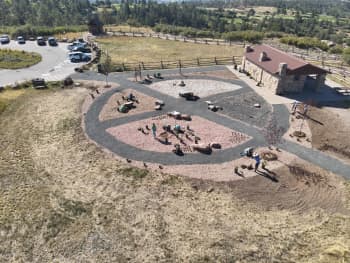
Daniels Park Grassland Demonstration Garden: Reconnecting Metro Denver to Colorado’s native and culturally significant plants. Facilitated by Denver Zoo. (pictured)
Ecological factors determine tree-planting success along an urban greenway. Facilitated by Denver Botanic Gardens.
Healthy Water, Healthy Communities. Facilitated by Groundwork Denver.
Open Space Restoration at The Urban Farm. Facilitated by The Urban Farm.
Tierras Verdes Community Food Forest. Facilitated by The GES Coalition
2025 Regional Vision Demonstration Project Grant Recipients
Dig Deeper Initiative. Facilitated by Denver Urban Gardens.
Honoring Ancestral Connections: Interpretive Signage for Montbello Open Space Park. Facilitated by Environmental Learning for Kids.
Improving Equitable Access to Nature through Sustainable Landscape Transformation at Denver Public Schools (DPS). Facilitated by DPS-Sustainability Team.
Many Destinations: Wetland Park Loop. Facilitated by Sand Creek Regional Greenway Partnership.
Nature Kids Longmont: Pilot Pollinator Projects. Facilitated by Thorne Nature Experience.
Quarterly “Nurture Nature” Service Days. Facilitated by Nature School Cooperative.
Rocky Mountain Greenway Nature Play. Facilitated by Friends of the Front Range Wildlife Refuges.
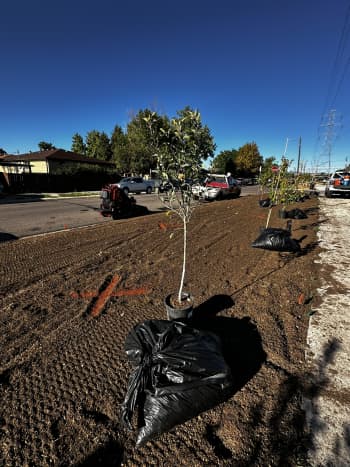
West Tennessee Avenue Greenway. Facilitated by Denver Park Trust. (pictured)
“Metro DNA’s Regional Vision for People and Nature establishes a unifying foundation that brings together a broad and diverse coalition committed to stewarding the natural resources that make the Denver area so special. Every person deserves access to nature – and nature depends on all of us to thrive.”
Chris Hawkins
Cities Program Director for The Nature Conservancy in Colorado
and Metro DNA Executive Committee member
Connect with Us
And get involved!
Metro Denver Nature Alliance relies on the support of donors and membership dues.
Metro DNA is a fiscally-sponsored project of:
Colorado Nonprofit Development Center
PO Box 18770
Denver, CO 80218
 Built with Shorthand